
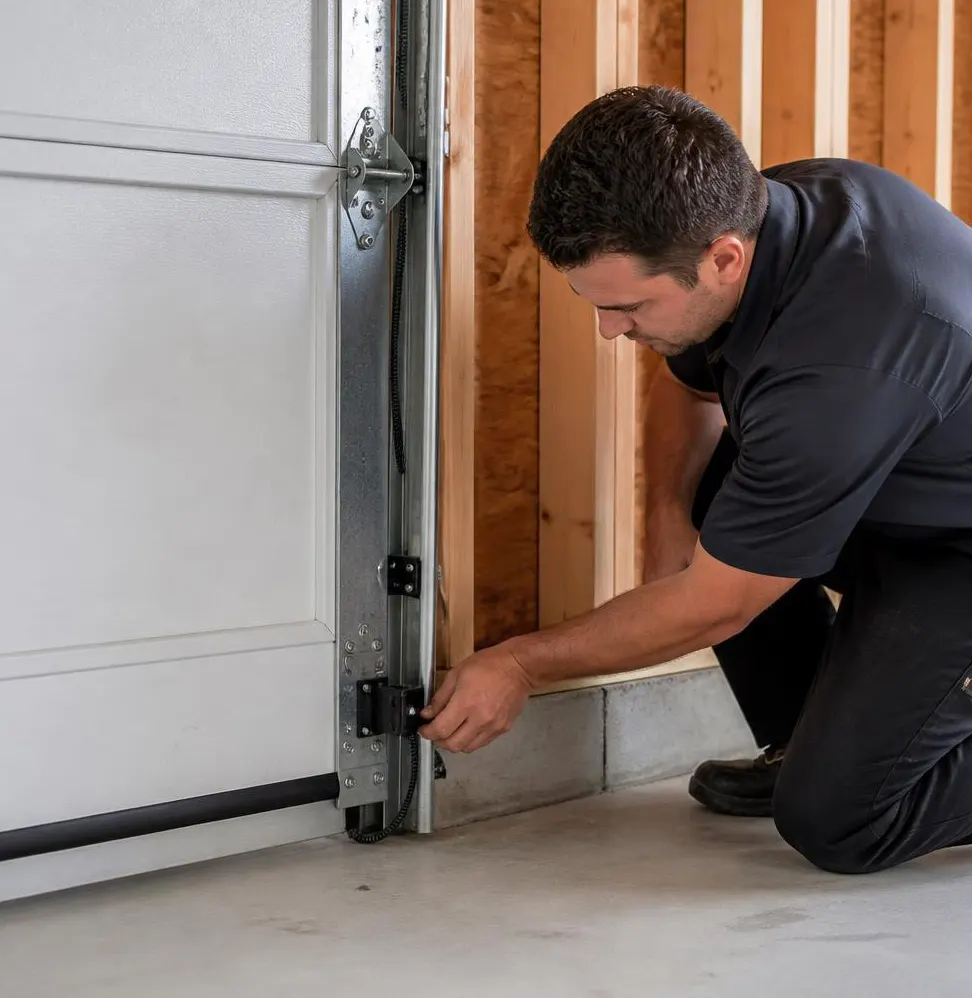
The short answer: your garage door itself can last 20 to 30 years if it's maintained, but the opener usually taps out around 10 to 15 years, and the springs, cables, and rollers wear out faster than either one. So if you and your spouse are arguing about whether it's time to replace "the garage door," you're probably actually arguing about three different things with three different lifespans.
Here's how to tell them apart and settle it for good.
The Door Itself: The Long-Lived Part
A well-built steel or aluminum door, hung correctly and kept out of standing water, is the part of the system that's built to last decades. The panels themselves don't have moving parts that wear down through friction — they just need to stay straight, rust-free, and properly sealed. In a coastal, humid climate like this one, the door panel's enemy isn't age, it's moisture: rust at the bottom corners, swelling in wood-composite doors, and pitting from salt air if you're closer to the coast.
If your door is 15+ years old and still opens smoothly, closes flush, and shows no rust-through or warping, there's a good chance it has another decade in it. Cosmetic fading from sun exposure doesn't mean structural failure.
What Actually Kills a Door Early
- Sitting in standing water after heavy afternoon downpours, which rusts the bottom panel from the inside out
- Repeated impacts — a car bumper tap, a basketball, a kid's bike — that bend a panel or knock the door off its track
- Humidity swelling in wood or composite doors that were never properly sealed
- Running the door when it's off-balance, which stresses the panels and the opener at the same time
The Opener: The Part With a Shelf Life
Garage door openers are small motors doing repeated mechanical work, and like any motor, they have a realistic service life — typically 10 to 15 years under normal use. Beyond that, you'll start to see warning signs: the motor runs louder or hotter, the door reverses for no reason, the remote range shrinks, or the opener struggles on hot afternoons when the garage interior climbs well past 90 degrees.
Heat and humidity are harder on opener electronics here than in a drier climate. Circuit boards and sensors don't love living in a hot garage all summer, and that shortens their practical life even if the motor itself still spins fine.
What Shortens Opener Life
- Letting the door's springs do less work than they should (a spring that's weakening forces the opener motor to compensate, straining it every single cycle)
- Dirty or misaligned safety sensors that make the opener work harder to complete a cycle
- Skipping force and limit adjustments after the door's balance shifts over time
- Running the opener through storm power surges without surge protection during hurricane season
Springs, Cables, and Rollers: The Real Wear Items
This is the part most homeowners don't realize is on its own clock entirely. Torsion springs are rated by cycle count — typically somewhere in the 10,000 to 15,000 cycle range for standard springs — which usually works out to 7 to 10 years for an average household, less if the garage sees heavy daily use. Cables wear similarly, and rollers (especially the cheaper nylon ones) can start cracking or binding well before either the door or opener shows any trouble.
These parts fail on their own schedule regardless of how old the door panel or opener is. That's why a 25-year-old door can suddenly need a spring replacement, and why a brand-new opener installed on tired springs will burn out years ahead of schedule.
What Actually Extends the Life of the Whole System
- Annual balance checks — disconnect the opener and lift the door by hand; it should stay put at waist height. If it falls or flies up, the springs are off and the opener is compensating
- Lubricating hinges, rollers, and springs twice a year, more often if you're near the coast where salt air accelerates corrosion
- Replacing worn rollers and fraying cables before they fail, not after
- Keeping the track and bottom panel clear of debris and standing water after storms
- Checking wind-load hardware before hurricane season, since reinforced struts and bracing take stress off the whole system during high winds
When to Call South Daytona Overhead Door Co
If your door is sagging on one side, the opener strains and groans, or you're not sure whether the issue is the springs or the motor, that's exactly the kind of question worth a second opinion before you spend money on the wrong fix. Our Garage Door Maintenance & Tune-Up service checks balance, hardware, and opener settings in one visit, and if we find worn cables or rollers, our Cable & Roller Replacement work handles it before a cable snap turns into an off-track door at the worst possible time.
If you're in South Daytona, Daytona Beach, Port Orange, Holly Hill, Ormond Beach, New Smyrna Beach, Edgewater, or DeLand and you want a straight answer about what's actually wearing out on your garage door, give South Daytona Overhead Door Co a call. We'll tell you what needs attention now, what can wait, and settle the argument for you.