
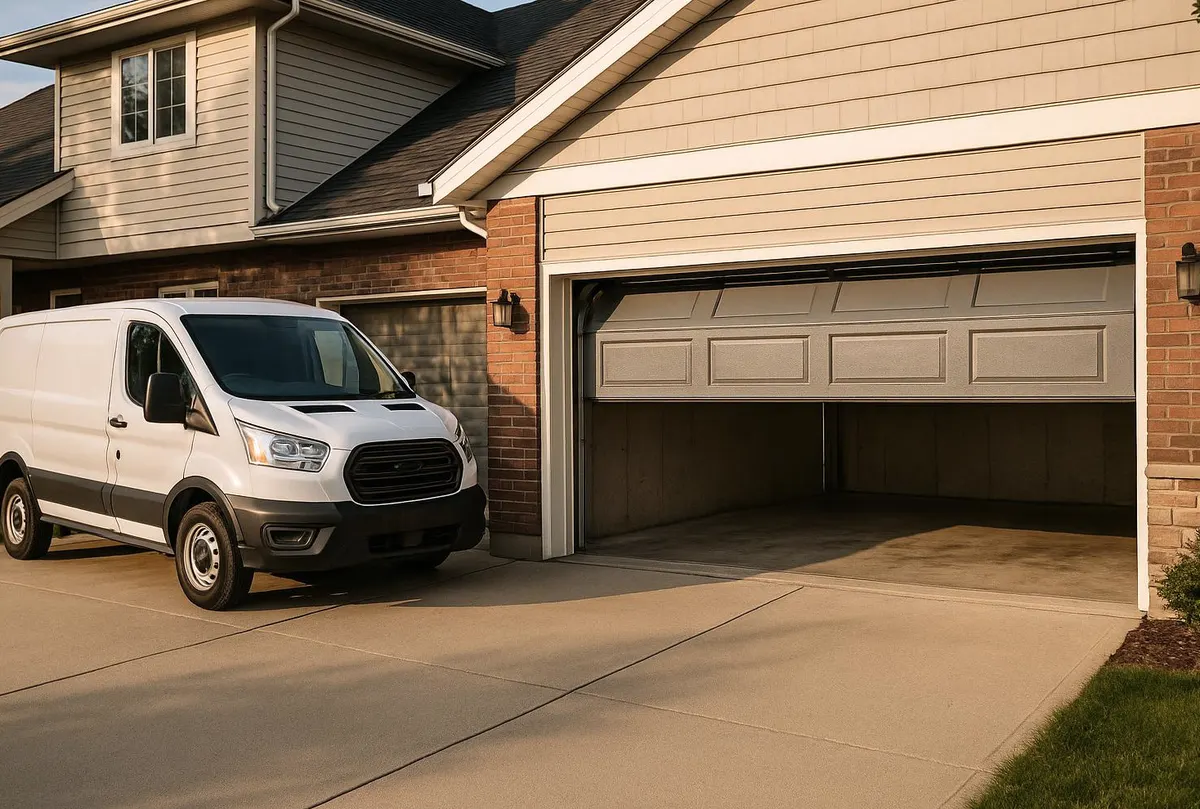
On a typical service call about this, here's what a technician usually finds: a single-car garage attached to the house, a non-insulated steel door from the 90s, and a homeowner convinced the door is why the laundry room is always hot. Sometimes that's true. Sometimes the real problem is a gap under the door big enough to see daylight through, or an attic access panel left open. The R-value argument gets settled fast once you look at the actual layout of the house, not the brochure.
What R-value actually measures
R-value is a rating of how well a material resists heat transfer. On a garage door, it only describes the door panel itself — not the gaps around the perimeter, not the weatherstripping at the bottom, not whether the garage has a window or a pet door cut into a side entry. A door rated R-16 can still leak more heat than a cheaper R-8 door if the seals are shot or the door is warped and not sitting flush in the track. In this climate, with humidity swelling wood trim and sun baking the south- and west-facing panels, seal condition changes faster than people expect, so the door's rated R-value and its real-world performance can drift apart within a few years.
Who genuinely benefits from insulation
- Garages that share a wall, ceiling, or room above with living space. If there's a bedroom, bonus room, or laundry area directly next to or above the garage, an insulated door reduces how much heat and noise transfers through that shared surface.
- Garages used as a workshop, home gym, or home office. If someone spends real time out there, especially through a Florida summer, insulation makes the space noticeably more tolerable.
- Homes with a mini-split or ductwork running through the garage. Conditioned air moving through an uninsulated hot box loses efficiency before it even reaches the house.
- Anyone bothered by road noise or afternoon storm noise. Insulated doors, usually a steel-polyurethane-steel sandwich, are noticeably quieter during wind-driven rain than a single layer of sheet steel.
Who is paying for a feature they'll never use
- Detached garages used purely for storage or parking, with no adjoining living space and no HVAC running through them. Insulation won't do much here except add cost and weight.
- Garages with poor sealing elsewhere — gaps at the bottom seal, a warped section, or a door that doesn't sit evenly in the track. Insulation is the wrong fix if the door isn't sealing well in the first place; fixing the seal and track alignment solves more of the problem for less money.
- Anyone expecting a dramatic drop in the home's overall energy bill. A garage door is one surface among many. It can meaningfully affect the garage's own temperature and anything attached to it, but it's not going to transform whole-house cooling costs on its own.
A local wrinkle worth knowing
Insulated doors aren't just about temperature here — the layered steel-and-foam construction is also stiffer than a single steel skin, which matters for wind-load performance during hurricane season storms. A heavier, better-braced door resists flexing and buckling under gusts better than a thin uninsulated panel. So in coastal and near-coastal Volusia County homes, the insulation upgrade and the wind-resistance upgrade often come as a package deal, even if temperature control wasn't the original argument. The trade-off: a heavier door puts more load on the springs and opener, so those usually need to be matched or upgraded at the same time, not treated as an afterthought.
How to settle it without guessing
Go look at the garage itself. Is there a shared wall or ceiling with the house? Is there ductwork or a mini-split unit running through it? Is the current door making a racket during storms, or showing daylight around the edges? Those answers settle the argument faster than any spec sheet. If the door is structurally sound and just needs better sealing, that's a maintenance fix. If it's old, dented, rusted from salt air, or genuinely undersized for wind load, that's a replacement conversation.
When to call South Daytona Overhead Door Co
If you're trying to figure out whether insulation makes sense for your specific garage, that's worth a real look rather than a guess. We handle Garage Door Installation & Replacement for homeowners weighing insulated versus standard doors, and we check spring and opener capacity as part of that so a heavier door doesn't strain the system. If your current door is sound but drafty or noisy, our Garage Door Maintenance & Tune-Up service addresses seals, track alignment, and rollers — often solving the actual complaint without a full replacement.
If you're in South Daytona, Port Orange, Daytona Beach, or anywhere nearby in Volusia County and want a straight answer on what your garage actually needs, give South Daytona Overhead Door Co a call. We'll tell you honestly whether insulation is worth it for your setup.