
The Moment You Notice
You press the remote in the driveway, or your fingers are already on the wall button inside, and nothing happens. Maybe the opener hums but the door doesn't move. Maybe you hear a loud click and then silence. Maybe the light blinks a few times and that's it. Whatever the exact sound, the result is the same: you're standing there with groceries, or late for work, staring at a door that won't budge.
Before assuming the worst, it helps to know that a dead garage door has a short list of usual suspects, and a technician works through them in a specific order — starting with the cheapest, fastest fixes and moving toward the ones that need tools and parts.
Symptoms Worth Noting Before You Call
Pay attention to exactly what the door and opener are doing, because it narrows things down fast:
- Total silence — no light, no hum, no click.
- Motor runs but door doesn't move — you hear the opener working, but the door stays put or only shudders.
- Door starts to open, then reverses or stops — it moves a few inches and quits.
- Loud bang beforehand — a sharp noise, often from the ceiling area, right before the door stopped working.
- Door is heavy or won't lift by hand — you've pulled the red cord and tried manually, and it barely moves.
The Order a Technician Checks Things
1. Power to the Opener
This sounds obvious, but it's first because it's the most common and the cheapest to fix. Check that the opener is plugged in, the outlet works (test it with a phone charger), and the breaker hasn't tripped. After one of South Daytona's afternoon downpours, it's not unusual for a GFCI outlet in the garage to trip from humidity or a small power surge. Resetting it solves the problem in under a minute.
2. The Remote and Wall Control
Dead remote batteries are common, but also check the wall-mounted button — if the wiring behind it has corroded or a wire has loosened (which happens more in salt-air conditions near the coast), the signal never reaches the motor. A tech will test both independently before moving on.
3. The Safety Sensors
Every opener built in the last few decades has two small sensors near the floor on each side of the track. If they're misaligned, dirty, or one has a cobweb or bug across the lens, the opener refuses to close — and on some models, refuses to do anything at all. Humidity and condensation can fog the lenses, and heavy rain can knock a sensor bracket slightly out of position. This is a quick check: a technician looks for a steady light on each sensor and realigns them if the lights are blinking or off.
4. The Manual Disconnect
That red cord hanging from the trolley is meant for power outages, but it's also the reason kids, pets, or a stray broom handle can accidentally disconnect the door from the opener. If the cord has been pulled, the motor runs fine but the door doesn't move at all, because it's no longer attached to the carriage. Reconnecting it is free and takes seconds once you know that's the cause.
5. A Broken Spring
If you heard a bang before the door quit, this is almost certainly it. Garage door springs are under heavy tension and carry most of the door's weight. When one snaps, the opener doesn't have the strength to lift the door on its own — you might see it try, strain, and stop. Springs typically last several years but wear faster here due to humidity and salt air causing rust, plus the constant temperature swings between hot days and cooler nights. This is not a DIY repair — the tension involved can cause serious injury. A technician replaces both springs as a pair (even if only one broke) since the second is usually close behind.
6. Cables, Rollers, and Off-Track Issues
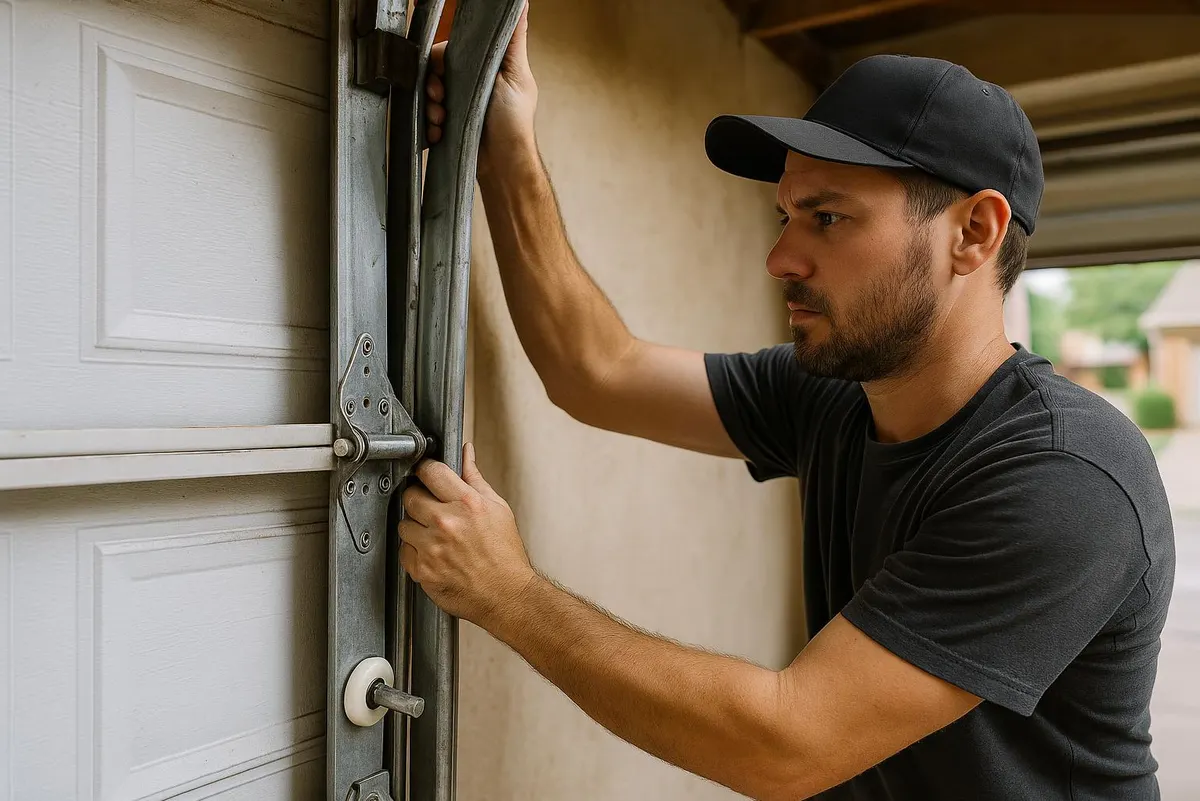
If the door is crooked, hanging unevenly, or stuck partway, a cable may have slipped off its drum or a roller may have jumped the track. This often happens gradually as rollers wear out or tracks shift slightly over time — moisture and swelling in wood-frame openings can also nudge a track out of alignment. The fix involves re-seating the cable or roller, checking the track alignment with a level, and replacing any worn rollers before they fail completely.
7. Opener Motor or Gear Failure
Last on the list because it's the least common cause, but if everything above checks out and the door still won't move, the opener's internal gear (often a nylon drive gear) may have stripped, or the motor itself may have burned out. This usually shows up as a straining sound with no movement at all. Depending on the opener's age, a tech will either replace the gear kit or recommend a new opener installation if the unit is old enough that parts are hard to source.
When to Call South Daytona Overhead Door Co
If your door won't open and you've checked the obvious (power, remote batteries, sensor lights, the manual cord), it's time to call. Our technicians carry spring, cable, and roller stock on the truck, so most Garage Door Spring Repair and Off Track Door Repair calls are resolved in a single visit. We'll also check your opener's gears and connections while we're there, since a door that won't open is often two small problems happening at once rather than one big one.
If your garage door in South Daytona, Port Orange, Holly Hill, or anywhere else in Volusia County won't budge, give South Daytona Overhead Door Co a call — we'll get it diagnosed and moving again, usually the same day.